Retaining Walls
Retaining Wall Repair & Replacement
Retaining walls hold back soil and help manage changes in elevation across a property. They can help control erosion, stabilize slopes, create usable levels of land, and improve drainage and landscaping. Concrete retaining walls can provide a durable structural solution for both residential and commercial properties. Over time, retaining walls can experience cracking, leaning, drainage problems, settlement, or other signs of deterioration. Experience Concrete Design provides professional retaining wall repair or replacement services that can help restore stability, functionality, and appearance while addressing problems before they become more extensive.
Residential Retaining Walls
Residential retaining walls can be used to manage sloped yards, create additional usable space, control erosion, define landscaping areas, and improve drainage around a home. A properly designed retaining wall can provide both structural support and an attractive addition to your outdoor space.
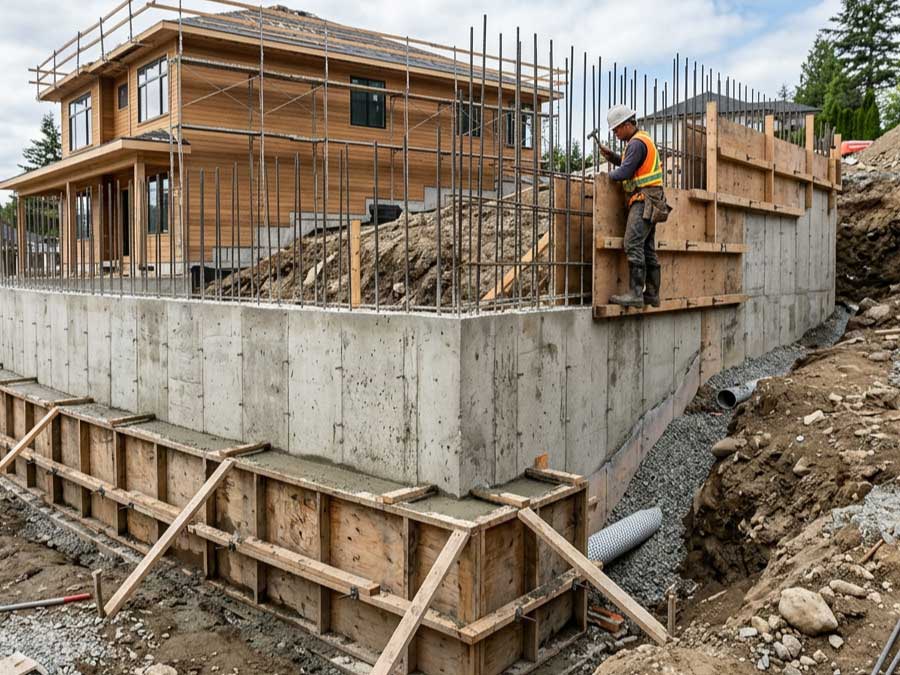
Benefits of Residential Retaining Walls
Installing, repairing, or replacing a residential retaining wall can provide several benefits, including:
- Help control soil erosion
- Stabilize sloped or uneven areas
- Create additional usable yard space
- Improve drainage and water management
- Protect landscaping and other property features
- Define gardens, planting areas, and outdoor spaces
- Improve the appearance and functionality of your property
- Provide long-term structural support when properly designed and installed
Signs Your Residential Retaining Wall Needs Repair or Replacement
Small problems can sometimes be repaired, while significant leaning, movement, cracking, or structural deterioration may require partial or complete retaining wall replacement.
Your retaining wall may need professional attention if you notice:
- Cracks developing in the wall
- Sections that are leaning or tilting
- Bulging or bowing areas
- Soil pushing through cracks or joints
- Wall sections that are separating or shifting
- Erosion around or behind the wall
- Drainage or standing-water problems
- Significant settlement
- Loose, damaged, or deteriorating sections
- A wall that appears to be losing structural stability
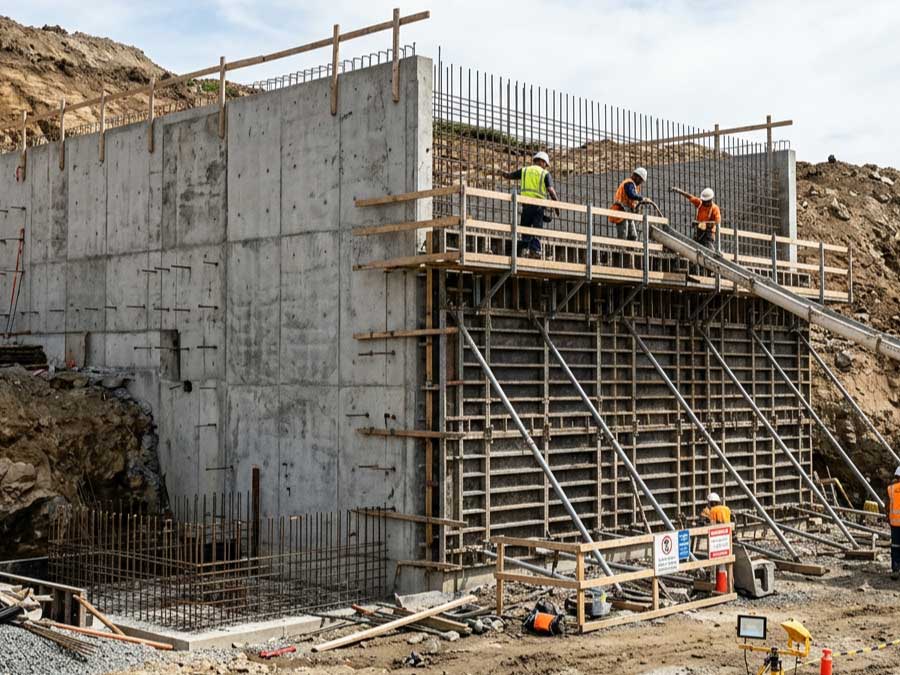
Commercial Retaining Walls
Commercial retaining walls can help manage the slopes and the elevation changes around offices, retail properties, apartment communities, industrial facilities, parking areas, and other commercial developments. They provide important soil stabilization while helping businesses make better use of available property. The professionals at Experience Concrete Design understand that commercial retaining walls can support substantial amounts of soil and serve larger properties. Which is why we ensure; a proper design, efficient drainage, top quality materials, and detailed installation in our retaining wall service or replacement services.
Benefits of Commercial Retaining Walls
Commercial retaining walls can:
- Help stabilize slopes and elevated areas
- Control soil erosion
- Protect buildings, parking areas, and other property features
- Improve drainage and water management
- Create additional usable commercial space
- Help manage elevation changes throughout a property
- Protect landscaping and site improvements
- Improve the overall appearance and functionality of a commercial property
- Provide long-term structural support when properly designed and constructed
Signs Your Commercial Retaining Wall Needs Repair or Replacement
Addressing retaining wall problems early can help protect surrounding property and may prevent a localized issue from developing into a more extensive structural problem. Commercial property owners and managers should consider having a retaining wall evaluated if they notice:
- Significant cracks or structural damage
- Leaning, bowing, or tilting
- Wall sections that have shifted or separated
- Soil movement behind or around the wall
- Excessive erosion
- Drainage or water-collection problems
- Settlement near the retaining wall
- Deteriorating concrete or other structural materials
- Repeated repairs that have not resolved the underlying problem
- Changes in the wall’s shape or alignment
Concrete Retaining Wall Repair or Replacement
Call us today or fill out our online form for a FREE quote on your new residential or commercial concrete retaining wall replacement or repair.